


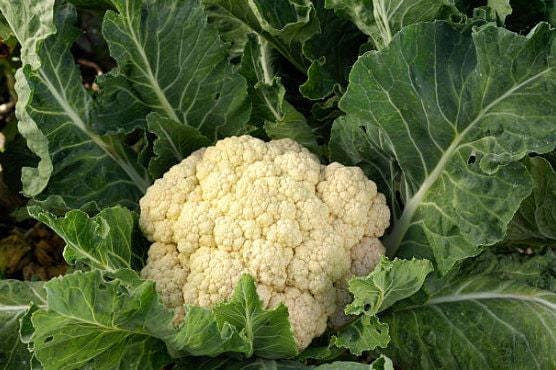
Snowball Cauliflower (Brassica oleracea var. botrytis) is a reliable, heavy-yielding heirloom variety known for its flavorful, 6-inch snow-white heads and high-quality harvests. The leaves naturally curl around the developing heads, providing self-blanching and helping protect the curds from sun discoloration. Maturing in approximately 70-80 days, Snowball is a good choice for gardeners in areas with shorter growing seasons when planted at the right time. Mature heads can hold well in the garden, allowing you to harvest as needed rather than picking everything at once.
The uses for this versatile vegetable are nearly endless! Enjoy Snowball cauliflower riced, roasted, mashed, pickled, or transformed into cauliflower pizza crust. It can be eaten fresh, cooked for meals, or frozen for later use. Cauliflower has a long culinary history, with cultivation dating back centuries in the Mediterranean region and surrounding areas. It later became popular in European royal kitchens and eventually found its way into American home and commercial gardens, where it remains a favorite vegetable today.
SCROLL DOWN FOR DETAILED GROWING INFO *
Common Names: Snowball Cauliflower, Snowball Y, White Cauliflower
Latin Name: Brassica oleracea var. botrytis
Type: Vegetable
Life Cycle: Biennial, typically grown as an annual vegetable
USDA Zones: Adaptable to a wide range of growing zones when planted during suitable cool-season conditions.
Stratification: Not required
Germination Ease: Easy
Sunlight: Full Sun to Partial Shade
Moisture: Requires consistently moist soil, especially while the head develops.
Soil: Fertile, nutrient-rich, well-drained soil with plenty of organic matter and a slightly acidic to neutral pH.
Height: Approximately 12-30 inches
Spread: Approximately 12-24 inches
Color: Snow-white heads with green foliage.
Days to Maturity: Approximately 70-80 days, depending on growing conditions.
Harvest Season: Spring or fall, depending on planting time and local climate.
Companion Plants: Beans, peas, lettuce, celery, and dill. Avoid repeatedly planting cauliflower in soil recently used for other brassica crops.
Climate Adaptability: Best suited to cool weather. Heat, drought, or interrupted growth can interfere with head development.
~ Sowing ~
When to Start Inside: Start seeds indoors approximately 4-6 weeks before transplanting outdoors. For a spring crop, sow early enough to establish sturdy seedlings before planting outside. For a fall crop, start seeds in summer so heads develop as temperatures cool.
When to Start Outside: For spring planting, sow outdoors around 1-2 weeks before your average last frost date, depending on local conditions. For a fall harvest, sow outdoors approximately 10-12 weeks before your average first fall frost date. Starting seeds indoors is often more reliable, especially during hot weather.
Planting Depth: Sow seeds approximately ¼ inch deep.
Spacing: Sow seeds about 1 inch apart in seed trays or flats. Transplant seedlings approximately 18-24 inches apart, with rows about 24-36 inches apart.
Watering: Keep the seed-starting mix evenly moist but not waterlogged. Water gently after sowing and avoid allowing young seedlings to dry out.
Light and Temperature: Provide bright light after germination. Seeds germinate well at approximately 70-80°F, while established plants grow best in cooler conditions.
Germination: Seeds typically germinate in approximately 5-10 days under suitable conditions.
Transplanting: Transplant young, healthy seedlings while they are actively growing. Harden them off gradually before planting outdoors. Avoid allowing seedlings to become root-bound or stressed, as interrupted growth can lead to small, premature heads.
~ Growing ~
Location: Choose a sunny location with fertile soil and good drainage. Cauliflower needs steady growing conditions to develop full-sized heads.
Soil Preparation: Incorporate compost or other well-rotted organic matter before planting. Cauliflower is a relatively heavy feeder, so fertile soil is important.
Watering: Provide approximately 1-1½ inches of water per week from rainfall and irrigation, adjusting for weather and soil conditions. Keep moisture consistent, especially as the head begins to form. Drought stress can cause small or poorly developed heads.
Fertilizing: Work compost into the soil before planting. A balanced vegetable fertilizer may be used according to soil-test recommendations and product directions. Avoid nutrient deficiencies that can slow growth.
Weed Management: Keep the area around young plants free of weeds. Cultivate carefully to avoid damaging shallow roots.
Self-Blanching: Snowball is known for its self-blanching habit. The outer leaves naturally curl around the developing head, helping keep the curds white and protecting them from sunlight. In warm conditions, the leaves may not cover the head completely. If necessary, loosely tie a few outer leaves over the head once it begins to develop.
Pest and Disease Management: Watch for cabbage worms, cabbage loopers, aphids, flea beetles, and other brassica pests. Row covers can help protect young plants. Crop rotation, good air circulation, and avoiding prolonged wet foliage can help reduce disease problems.
Maintenance: Keep plants growing steadily and avoid major interruptions caused by drought, heat, or nutrient shortages. Cauliflower generally produces one main head per plant.
~ Harvesting ~
When to Harvest: Harvest when the heads are firm, compact, and white, generally around 6 inches across for Snowball varieties. Heads typically mature in approximately 70-80 days, depending on growing conditions.
Appearance: The curds should be tightly packed and smooth. Harvest before the head begins to loosen, separate, or develop a coarse texture.
How to Harvest: Use a sharp knife to cut the head from the plant, leaving several outer leaves around it to protect the curds during handling.
Harvest Timing: Snowball heads can hold well in the garden under favorable conditions, allowing you to harvest at different times. Check plants regularly, as hot weather can cause heads to lose quality more quickly.
Storage: Refrigerate harvested heads promptly. Fresh cauliflower generally keeps for about a week or longer under good refrigeration conditions. It can also be blanched and frozen for longer storage.
Culinary Uses: Snowball cauliflower is excellent roasted, steamed, boiled, mashed, pickled, or added to soups and casseroles. It can also be riced or used to make cauliflower pizza crust.
~ Seed Saving ~
Cauliflower is a biennial crop that normally produces seed during its second growing season. To save seed, selected plants must remain in the garden through suitable conditions so they can flower and produce seed.
Flowering: Allow selected plants to produce flowering stalks. After pollination, seed pods develop along the stalks and gradually mature.
Collecting Seeds: Harvest the seed pods when they turn brown and dry, before they split open and release their seeds. Allow harvested pods to finish drying in a protected, well-ventilated place, then thresh and clean the seeds.
Isolation: Cauliflower can cross-pollinate with other compatible Brassica oleracea crops, including broccoli, cabbage, kale, and Brussels sprouts. Isolation from other flowering varieties is necessary to maintain varietal purity.
Storage: Store fully dried seeds in a labeled envelope or airtight container in a cool, dry, dark location.
~ Additional Information ~
Cool-Season Crop: Cauliflower grows best during cool weather. Spring crops should mature before summer heat becomes excessive, while fall crops benefit from planting dates that allow heads to develop as temperatures cool.
White Heads: Sunlight can cause cauliflower heads to become yellowish or discolored. Snowball's self-blanching leaves help shade the developing curds, although additional leaf covering may occasionally be needed.
Botanical Family: Cauliflower belongs to the Brassicaceae family, along with cabbage, broccoli, kale, mustard, and Brussels sprouts.
Growing Tip: Consistent moisture and uninterrupted growth are key to producing good cauliflower heads. Avoid letting plants dry out, and time planting so the heads develop during cool weather.
Culinary History: Cauliflower has been cultivated for centuries and became an important vegetable in European cooking before spreading widely through home gardens and commercial agriculture. Its versatility has helped make it a favorite in traditional and modern recipes alike.
All Nimble NiteCap Seeds are:
• Heirloom
• Organic
• Non-GMO
• Open Pollinated
• Untreated
• US Grown
• Growing instructions included
• Regularly tested and properly stored to maintain high germination rates
Sustainable Packaging & Shipping:
• Seeds are packaged in compostable packets printed in-house with vegetable-based inks on recycled materials.
• Orders ship with tracking in recycled mailers or recycled boxes.
• Most orders ship the same or next business day.
• Free shipping on orders over $50. Flat-rate shipping on all other orders.