


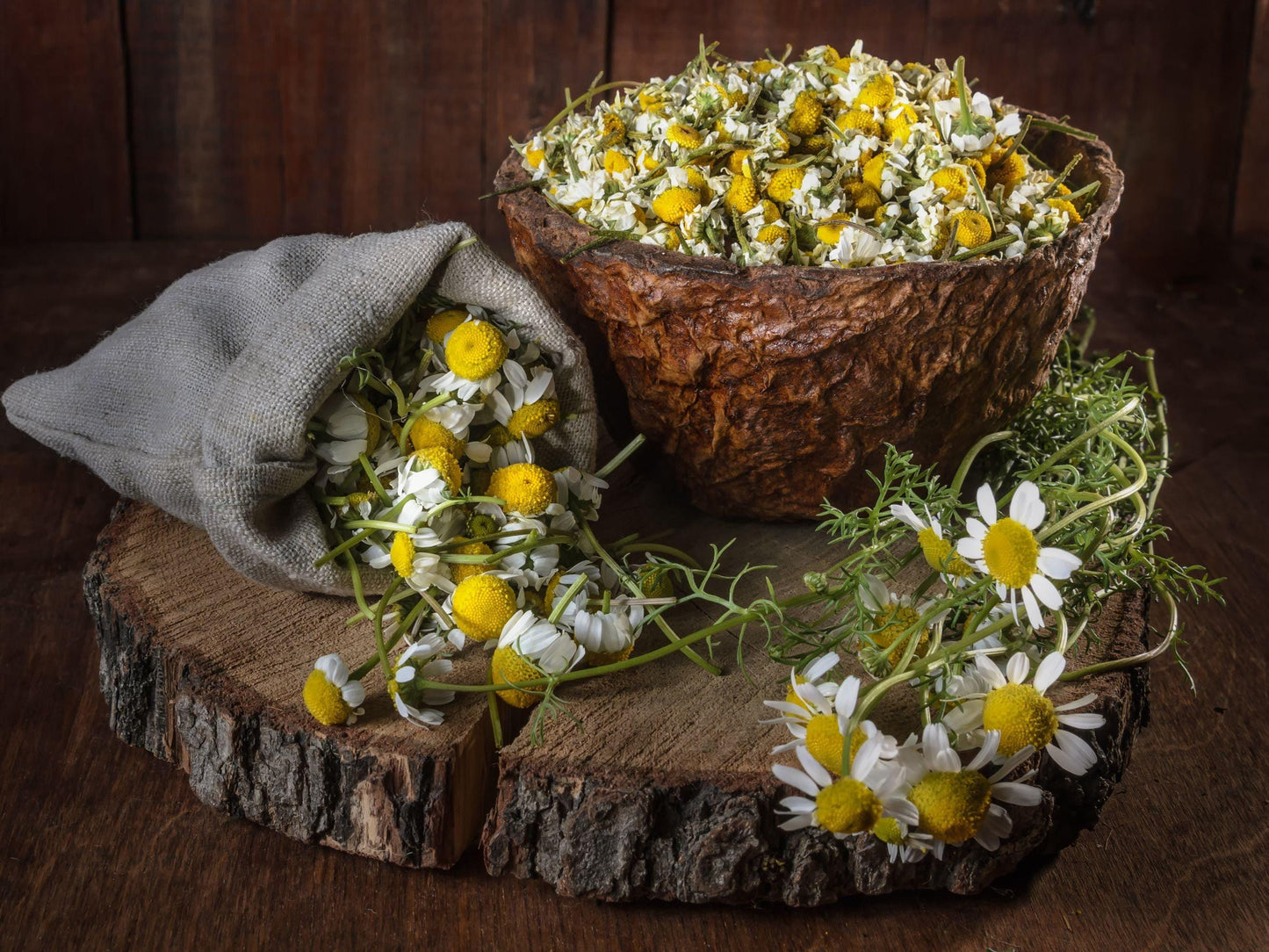
German Chamomile is a classic medicinal herb known for its delicate, daisy-like flowers, finely divided foliage, and distinctive sweet, apple-like fragrance. The flowers have white petals surrounding raised golden-yellow centers and are traditionally harvested for herbal tea. Under favorable growing conditions, plants may begin flowering about 55 to 65 days after germination, with additional blooms developing over the growing season.
German Chamomile is a useful addition to herb gardens, cottage gardens, vegetable beds, and pollinator plantings. Its flowers attract bees and other beneficial insects, and the harvested blossoms can be used fresh or dried for tea, sachets, and potpourri. Chamomile has a long history of use in traditional herbal practices, dating back to ancient civilizations. This easy-to-grow plant prefers cool weather, well-drained soil, and plenty of sunlight. It also readily self-seeds, allowing new plants to appear in subsequent seasons when some flowers are left to mature.
* SCROLL DOWN FOR DETAILED GROWING INFO *
Common Names: German Chamomile, Chamomile, German Matricaria, True Chamomile
Latin Name: Matricaria recutita (syn. Matricaria chamomilla, Chamomilla recutita)
Type: Culinary and aromatic herb, flowering annual
Life Cycle: Annual; readily self-seeds under favorable conditions
USDA Zones: Can be grown as an annual in all USDA zones during a suitable growing season; prefers cooler weather and tolerates light frost
Stratification: Not required
Germination Ease: Easy, provided seeds receive light and consistent moisture
Sunlight: Full sun; light afternoon shade can be helpful in hot climates
Moisture: Keep evenly moist during germination and early growth; established plants tolerate some dryness but benefit from watering during prolonged dry weather
Soil: Well-drained soil; tolerates moderately poor soil and generally does not require heavy fertilization
Height: 12–24 inches, sometimes taller under favorable conditions
Spread: Approximately 8–14 inches, depending on growing conditions and spacing
Color: White petals surrounding golden-yellow flower centers; finely divided green foliage
Days to Maturity: Approximately 55–65 days from germination to the first flowers under favorable conditions; flowering time varies with climate and growing conditions
Harvest Season: Late spring through summer and sometimes into fall, depending on planting date and climate
Companion Plants: Suitable for herb gardens, vegetable beds, and mixed flower plantings. Its blossoms provide forage for pollinators and other beneficial insects; no specific companion pairing is necessary for successful growth.
Climate Adaptability: Best in cool to mild weather; seedlings tolerate light frost, while prolonged heat can shorten flowering. Grows in containers or garden beds and may self-seed freely.
~ Sowing ~
Direct Sowing Outdoors
German Chamomile is best sown in early spring, as soon as the soil can be worked, or during a cooler period in late summer where there is enough time for plants to establish and flower. In mild climates, fall sowing may also work. Young seedlings tolerate light frost, making chamomile suitable for early-season planting.
Choose a sunny location with well-drained soil. Scatter the tiny seeds over the soil surface and press them gently against the soil without covering them. German Chamomile seeds need light to germinate, so avoid burying them beneath soil or a thick layer of mulch.
Keep the surface consistently moist until seedlings emerge, usually in about 7–15 days, although temperature and other conditions can affect germination. A gentle spray or fine mist helps prevent the small seeds from washing away or becoming buried.
When seedlings are established and large enough to handle, thin them to approximately 6–8 inches apart. This spacing allows room for branching and flowering while maintaining good air circulation.
Starting Seeds Indoors
For an earlier start or more control over moisture, sow seeds indoors about 4–6 weeks before the expected last spring frost. Fill a seed-starting tray with a fine, moist seed-starting mix, scatter the seeds on the surface, and press them lightly into contact with the mix.
Place the tray in a bright location and keep the surface moist without waterlogging it. A clear humidity cover can help retain moisture during germination, but remove it once seedlings emerge to improve airflow.
German Chamomile develops a relatively delicate root system. If transplanting, move seedlings while they are still small, handling the roots gently. Harden them off before planting outdoors, and space them approximately 6–8 inches apart. Direct sowing is also an excellent option because it avoids transplanting altogether.
~ Growing ~
Light, Soil, and Water
German Chamomile grows best in full sun and well-drained soil. It tolerates moderately poor soil and generally needs little fertilizer. Excessive fertility can encourage leafy growth at the expense of flowering, so avoid heavy feeding.
Keep the soil evenly moist while plants are young. Once established, chamomile can tolerate some dryness, but regular watering during extended dry periods helps maintain healthy growth and flower production. Because its roots are relatively shallow, check the soil near the surface rather than relying only on how dry the deeper soil feels.
In hot climates, light afternoon shade can help extend the flowering period. Prolonged high temperatures may cause plants to flower quickly and decline sooner than they would in cooler weather.
Spacing and Maintenance
Allow approximately 6–8 inches between plants, removing crowded seedlings as needed. Keep young plants free of competing weeds, particularly while they are small. Once established, chamomile generally requires little maintenance.
Harvest flowers regularly to encourage continued flowering. If you want the plants to reseed themselves, leave some flower heads on the plants until they mature and dry.
Containers and Self-Seeding
German Chamomile grows well in containers with drainage holes and a loose, well-drained potting mix. Choose a container large enough to accommodate several plants without overcrowding them, and check moisture more frequently than you would in a garden bed.
This annual readily self-seeds. New seedlings may appear around the original planting the following season, sometimes making the patch seem perennial. If you want to limit spreading, remove spent flowers before seeds mature or pull unwanted seedlings while they are small.
Common Problems
Chamomile is generally straightforward to grow. Aphids may occasionally gather on tender growth; a firm but gentle spray of water can help dislodge them. Poor drainage, overly wet soil, and crowded growth can contribute to plant stress, so avoid waterlogged conditions and allow adequate airflow.
~ Harvesting ~
When to Harvest
German Chamomile flowers may begin opening approximately 55–65 days after germination, although the timing varies with growing conditions. For the best harvest, pick flower heads when they are nearly or fully open, with the white petals extended and the yellow center developed. Harvest regularly while plants are producing flowers.
Pick on a dry day after the morning dew has evaporated. Avoid harvesting wet flowers, which are more difficult to dry properly and may develop mold during storage.
How to Harvest
Pinch or snip the flower heads just below the blossoms, leaving most of the stems and foliage in place. You can harvest individual flowers by hand or use a small comb or chamomile rake to gather multiple flower heads from a larger planting. Frequent harvesting encourages continued flowering.
For tea and most traditional herbal preparations, the flower heads are the primary part collected. The aromatic foliage can also be used in some preparations, but it is generally the flowers that are most valued.
Drying and Storage
Spread the harvested flowers in a single layer on a clean screen, tray, or cloth in a warm, dry, well-ventilated location away from direct sunlight. Turn them occasionally so moisture can escape evenly. A dehydrator on a low setting can also be used. Avoid excessive heat, which can diminish aroma and discolor the flowers.
Allow the blossoms to dry completely before storing them. They should feel dry and crisp rather than soft or damp. Place them in an airtight container and keep it in a cool, dark, dry location. Label the container with the harvest date and check periodically for signs of moisture or mold. For the best aroma and flavor, use dried flowers within about a year.
Fresh flowers can be used immediately for tea or other suitable preparations. If using chamomile for tea, make sure the flowers are clean and have been grown without unsuitable pesticide or chemical treatments.
~ Seed Saving ~
Allowing Flowers to Mature
To save seed, leave some healthy flower heads on the plant instead of harvesting every blossom. As the flowers age, the white petals fade and fall, and the central flower heads dry and turn brown. Allow the seed heads to mature on the plant as much as practical before collecting them.
Collect the dried heads on a dry day. If damp weather threatens, you can gather mature heads and finish drying them indoors in a well-ventilated area.
Collecting and Storing Seed
Once the flower heads are completely dry, gently crumble them over a clean tray or bowl to release the tiny seeds. Separate as much dried plant material as possible, taking care not to lose the fine seed. Allow the cleaned seed to dry further if necessary before storage.
Store seeds in a labeled paper packet or another suitable dry seed-storage container, away from heat, moisture, and direct sunlight. Keep them cool and dry until sowing.
Self-Seeding and Future Plants
German Chamomile readily drops seed naturally, so you can also leave a portion of the flower heads on the plants and allow new seedlings to emerge in subsequent seasons. Avoid covering the area with a thick mulch layer if you want volunteer seedlings to establish.
German Chamomile is an annual, not a true perennial. Its return from year to year is generally due to self-seeding rather than the original plant surviving winter. As with other flowering plants, seed production and germination depend on growing conditions and successful pollination.
~ Additional Information ~
German Chamomile vs. Roman Chamomile
German Chamomile (Matricaria recutita) and Roman Chamomile (Chamaemelum nobile) are different species. German Chamomile grows upright, usually as an annual, and is widely cultivated for its aromatic flower heads. Roman Chamomile is a low-growing perennial often used as a fragrant ground cover. They should not be treated as interchangeable when planning a garden.
Traditional Herbal Use
Chamomile has a long history in traditional herbal practices and is commonly used to prepare herbal tea. However, a long history of use does not establish that chamomile is effective for treating a medical condition, and scientific evidence varies by intended use.
Chamomile can cause allergic reactions, particularly in people sensitive to related plants in the daisy family, including ragweed, chrysanthemums, and marigolds. It may also interact with certain medications. Anyone who is pregnant, breastfeeding, taking medication, or considering chamomile for a medical purpose should consult a qualified healthcare professional when appropriate.
